On October 11, 2025, the ACM Turing Award Celebration Conference China 2025 (ACM TURC 2025) officially commenced in Shenzhen. Themed "Gathering Wisdom in Pengcheng, Writing a New Chapter for Turing", the two-day conference brought together nearly a thousand distinguished experts, scholars, researchers, educators, and young students from universities, colleges, research institutes, and tech enterprises worldwide. Participants discussed frontier topics, including artificial intelligence and big data, to explore new directions for the development of computer science and contribute technological strength to the advancement of human society.
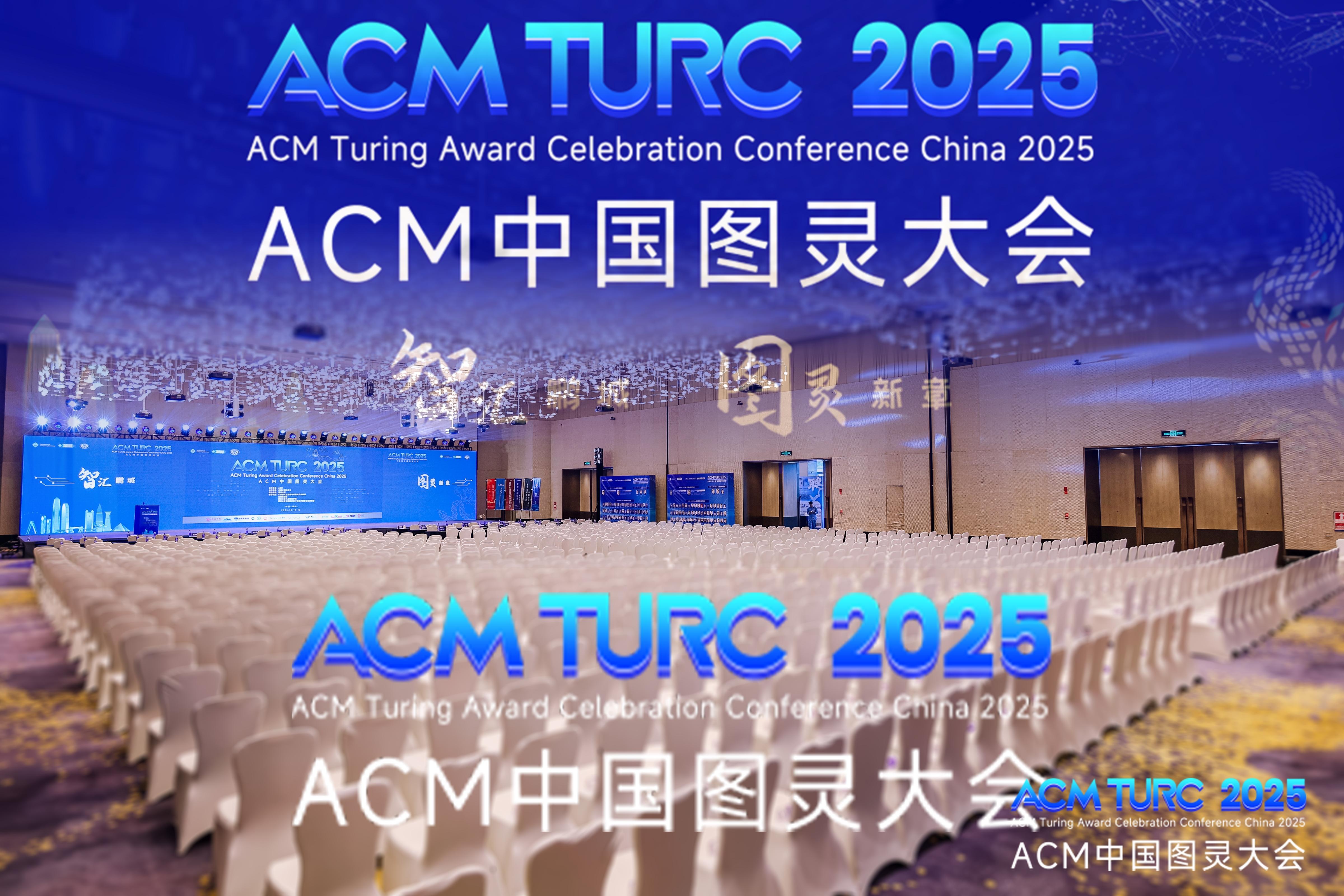
Li Qingquan, Party Secretary of Shenzhen University (SZU) and Academician of the Chinese Academy of Engineering, stated that SZU will continue to leverage its strengths in artificial intelligence and computer science to contribute to technological innovation in the Guangdong-Hong Kong-Macao Greater Bay Area.
Chen Guoliang, Co-Chair of the conference and Academician of the Chinese Academy of Sciences, noted that hosting the conference in Shenzhen carries special significance. The city, a hub of innovation, is home to over 2,000 AI enterprises and 67,000 robotics-related companies, providing an exceptional environment for the development of artificial intelligence and computer science.
Mei Hong, Chairman of the conference's Steering Committee and Academician of the Chinese Academy of Sciences, emphasized that this conference represents a key step in the evolution of the cooperative model between ACM and the China Computer Federation (CCF), reflecting both organizations' commitment to learning from each other and advancing together in the process of internationalization. Against the current international backdrop, such in-depth cooperation not only promotes mutual benefits but also injects sustained momentum into computing technology development in China and globally.
In his opening speech, Sun Ninghui, Co-Chair of the conference and Academician of the Chinese Academy of Engineering, highlighted the distinctive importance of the conference using the three keywords: ACM, China, and Turing. He noted that awards jointly established by ACM and CCF, such as the "ACM China Rising Star Award", have become important platforms for recognizing and motivating Chinese computer scholars. He expressed his hope that the two organizations will expand practical cooperation at the technical committee level and jointly raise the profile of academic activities in China.
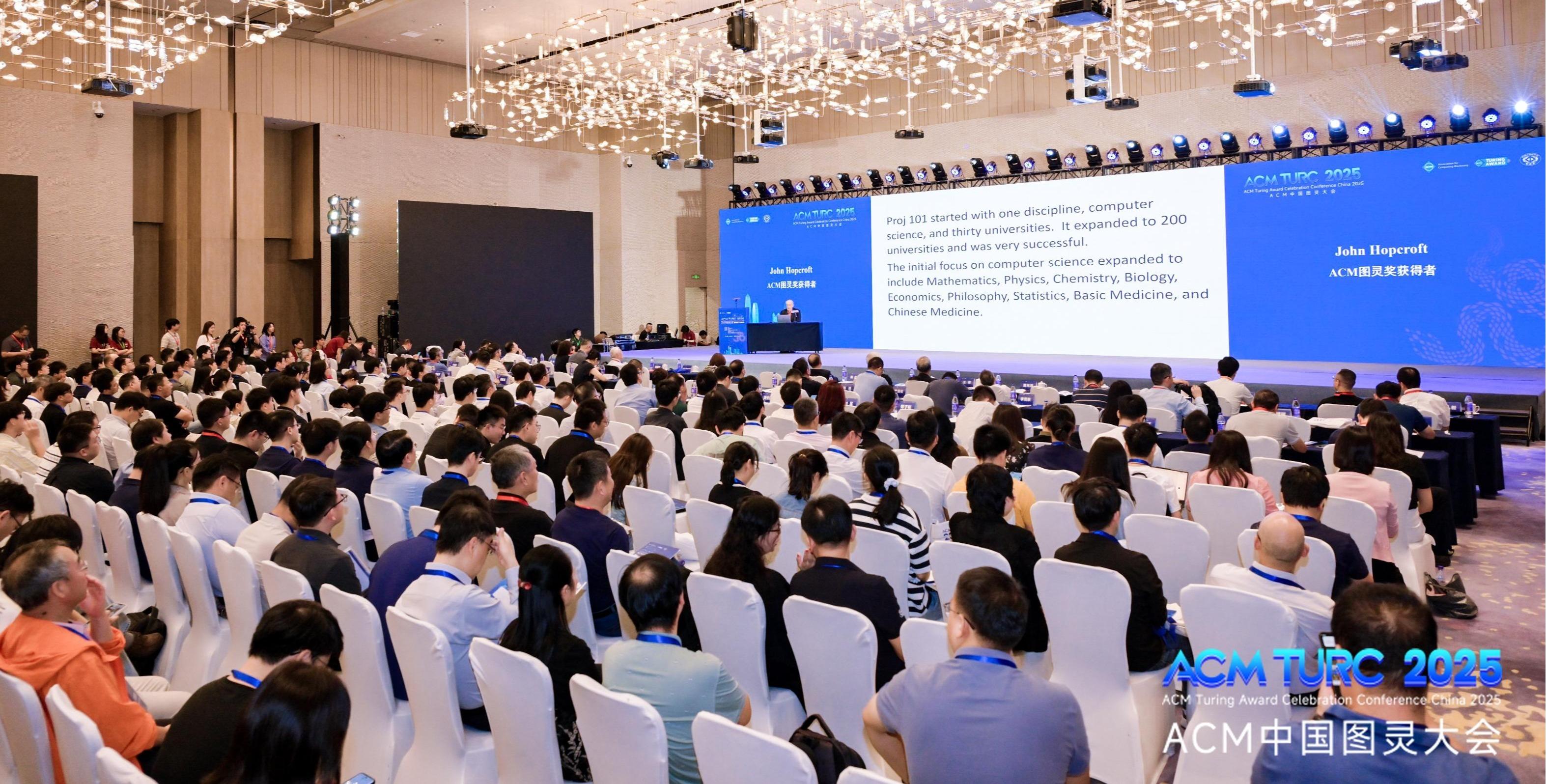
The conference featured keynote presentations and interdisciplinary dialogues. Turing Award laureates John Hopcroft and Joseph Sifakis, along with Lyu Jian, Academician of the Chinese Academy of Sciences, and Zheng Weimin, Academician of the Chinese Academy of Engineering, shared insights on topics including talent cultivation, AI applications in autonomous systems, transformation in the digital intelligence era, and the integration of HPC and AI. During interdisciplinary dialogues, experts such as Tian Qi, Wang Juhong, Ni Mingxuan, and Lyu Zicheng explored frontier topics including world models, AI-powered platforms, AI agents, and the quantum internet, sketching a vision for the future of computer science.
The conference also hosted 2 main forums and 14 specialized forums covering frontier fields including artificial intelligence, big data, and cybersecurity. Participating scholars and specialists held in-depth discussions on topics spanning multiple fields and directions, demonstrating the dynamic innovation of integrating computer technology with other fields.
Participants agreed that the conference serves as a significant opportunity to advance computer science in China, promote industry-academia-research collaboration, and provide a clearer blueprint for technological innovation and industrial development in the intelligent era.